ព័ត៌មានព្រឹត្តិការណ៍
សេចក្តីពិពណ៌នា
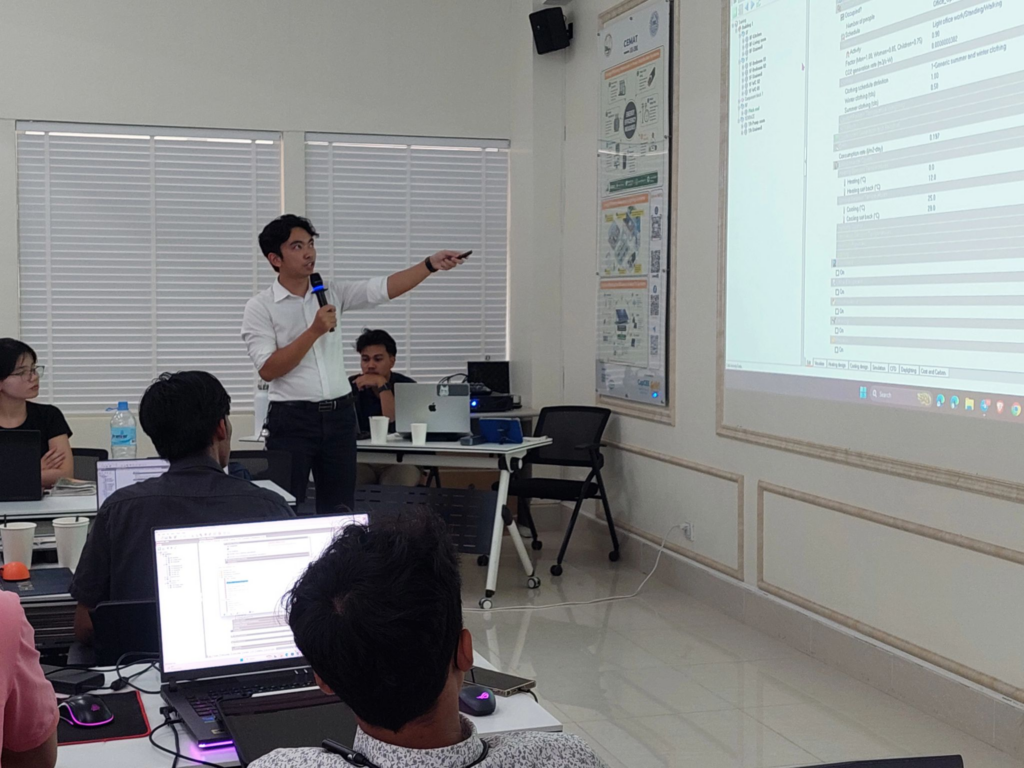
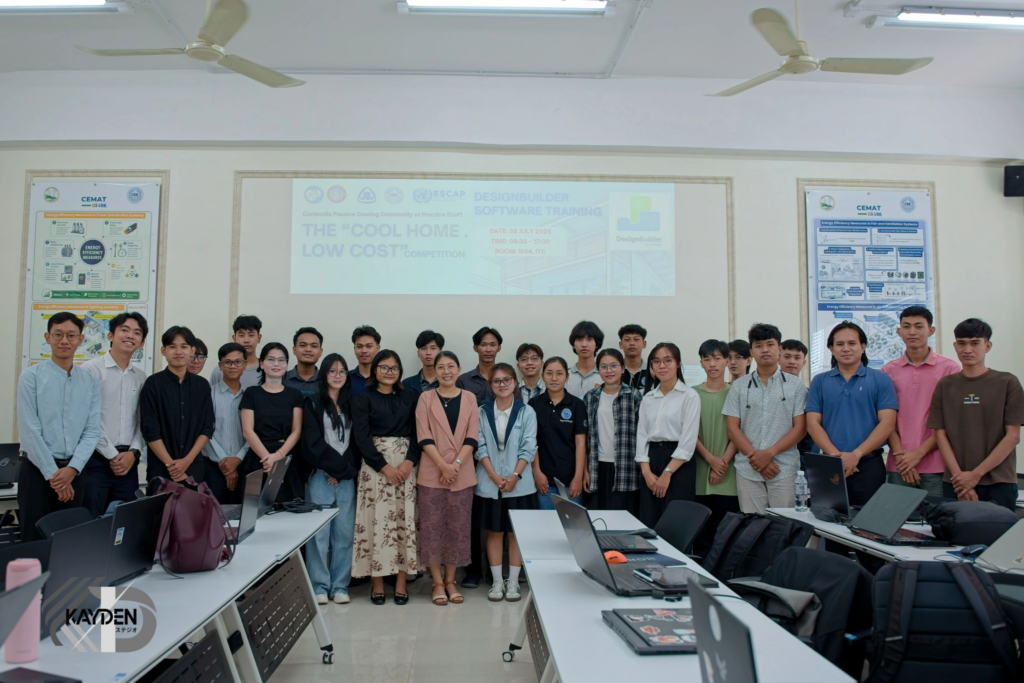
Phnom Penh, 28 July 2026 — The Cambodia Passive Cooling Community of Practice (CoP), in collaboration with the Institute of Technology of Cambodia (ITC), the Ministry of Land Management, Urban Planning and Construction (MLMUPC), and the National Council on Building Technical Regulations (NCBTR), hosted a DesignBuilder Software Training Workshop at ITC. This initiative received implementation support from the United Nations Economic and Social Commission for Asia and the Pacific (UN ESCAP).
Training Objectives
This session provides candidates with the additional benefit of gaining extra knowledge offered by the COP shared by COP members during the competition. It marks the second knowledge‑sharing session within the competition. This workshop participated by student teams, expert mentors, and CoP members to integrate Cambodia’s localized climate data and Passive Cooling Strategy (PCS) into building energy simulation software.
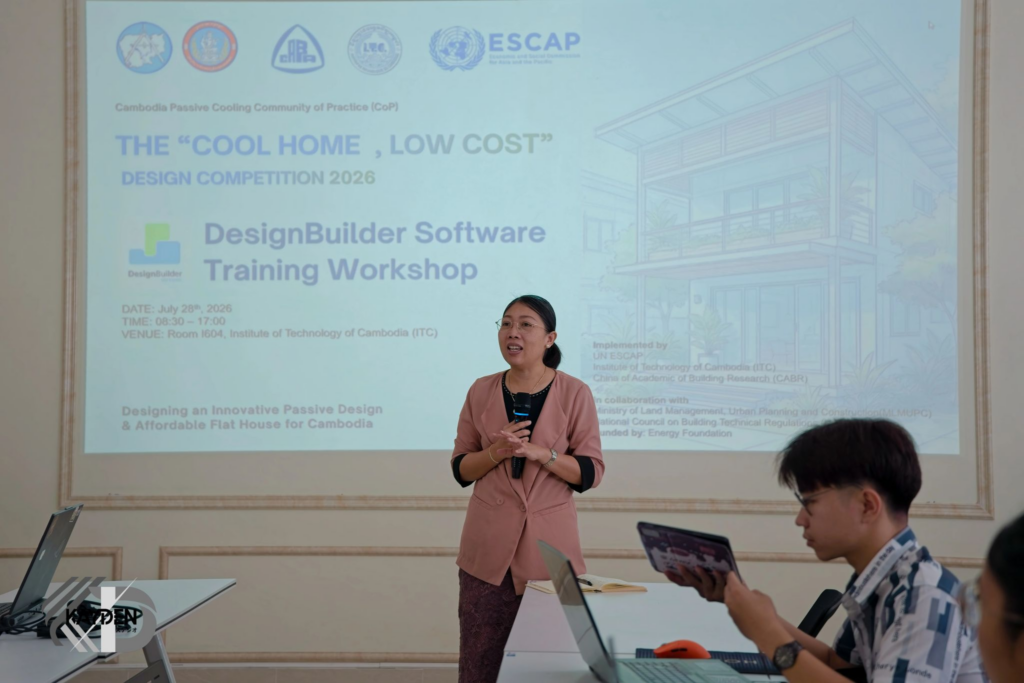
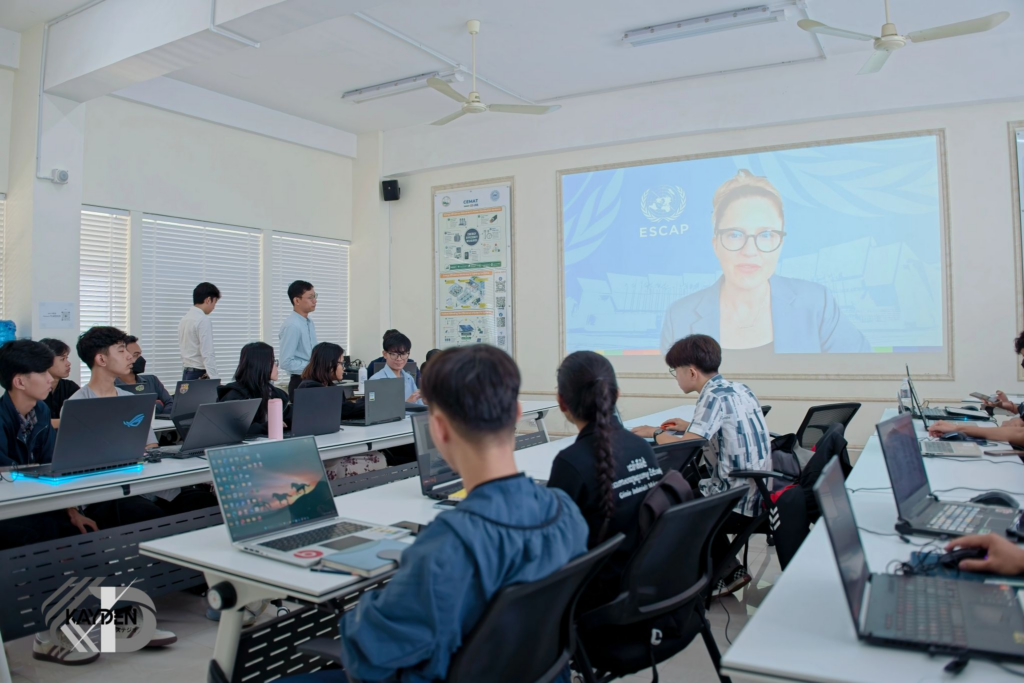
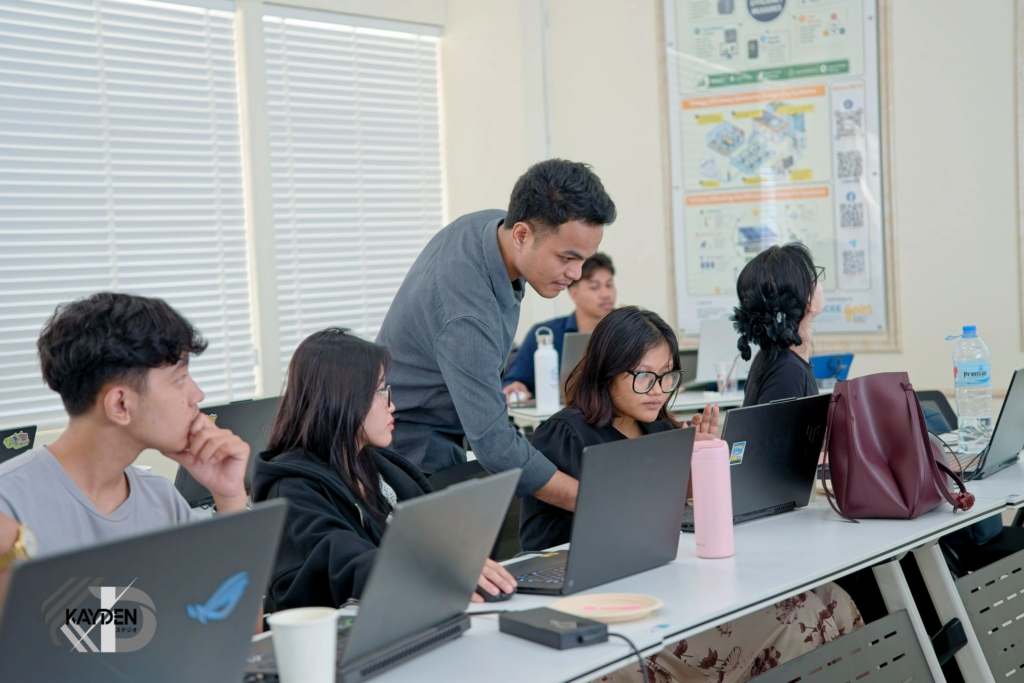
DesignBuilder was one of the simulation tools available for candidates to use in their designs during the competition. The participants gained valuable hands‑on experience applying quantitative simulation methods to validate passive cooling strategies, track project progress, and align upcoming deliverables for affordable, climate‑resilient tropical housing.
Key highlights of the workshop included:
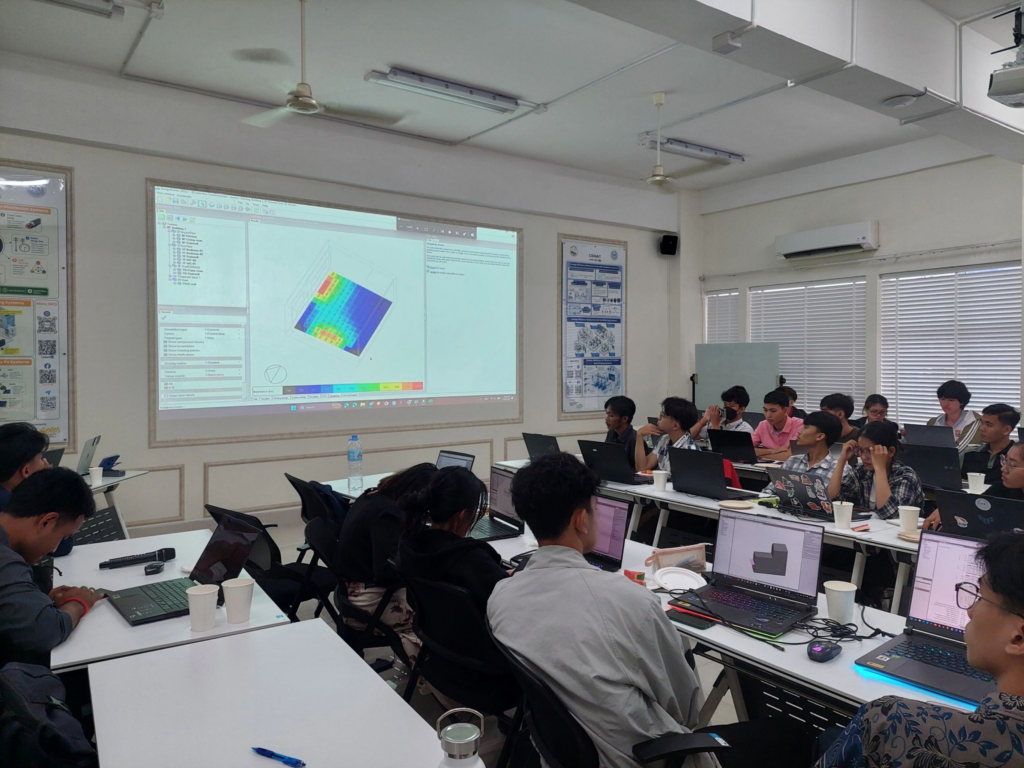
– Hands-on Training: A step-by-step training covering the DesignBuilder UI, setting up Cambodia’s EPW weather data, creating building geometry with external shading, and defining material schedules.
– Performance Simulation: Practical demonstrations on setting up natural ventilation profiles, executing cooling load calculations, and running thermal energy simulations.
As a result, our participating student teams gained hands-on experience using quantitative simulation tools to validate their passive cooling designs, review project progress, and align their upcoming competition deliverables for affordable, climate-resilient tropical housing